Tuesday, 30 July 2019

Varieties of Gothic


I’m not sure why it took me so many years to realise that I shared a birthday with Emily Brontë – July 30th.  Even in years when I have taught Wuthering Heights on our Victorian Literature course I never made the connection, presumably because I was trained in modes of literary interpretation – at first New Critical and Leavisite, subsequently literary-theoretical – which never had much time for authorial biography in the first place.  In later life, biography has come to seem a more important and moving genre to me, so I have finally made that Pinkney-Brontë linkage, presumably the only one there is.


 However, the issue of Emily Brontë and her novel – or, more generally, of the Brontës and their novels – does pose some theoretically interesting questions.  For if we take the Brontës’ fiction as being representative of that wider literary trend we now often term ‘female Gothic’, running say from Anne Radcliffe to Angela Carter and beyond, then I have never felt sure that I could convincingly articulate the relationship of this cultural tendency to that architectural and ultimately political Gothic which characterises the thinking of John Ruskin and William Morris.  Paranoid entrapment in a confined masculinist space, coupled with an unleashing of female desire, sits uneasily with admiration for the sensuous creativity of the carvers of the medieval cathedral and the adoption of that model of labour as a utopian alternative to the degraded and oppressive work practices of the capitalist present.
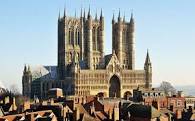

Are these two traditions imbricated in ways which we haven’t yet managed to define or theorise?  Will it always be the case that the powerful invocation of one kind of Gothic will also, at the level of the textual unconscious, emit unsettling traces of the other?  And might that be the reason why Morris’s embodiment of Gothic utopianism in News from Nowhere, which has plenty of ebullient socialist carvers of its own, also unleashes, in the latter third of the text, the energetic and enigmatic figure of Ellen, who has by her own admission ‘often troubled men’s minds disastrously’, and whom in the end the book hardly seems to know what to do with?

Tuesday, 23 July 2019

RSPB: Climate Hypocrites


‘This upper Thames valley, well-wooded and abundantly watered, is a land of birds,’ J.W. Mackail writes in his Morris biography; and in a similar mood of ornithological enthusiasm a few years back I dutifully filled out my direct debit form and joined the Royal Society for the Protection of Birds.


The RSPB certainly says all the right ecological things in its quarterly magazine.  Here, for instance, is Chief Executive Mike Clarke in the current issue: ‘If you know how to read them, the signs of worldwide environmental breakdown are all around us; from insect declines and the effects of air pollution on our soils, to more and more weather extremes’.  After sounding this dire warning note, he offers some modest hope; for ‘there are solutions that work with nature not against it … We can choose to have more personal impact now, and you can read ideas on p.28 about lifestyle actions we can take.  Individually these are small steps, but collectively we can make a difference at scale’.


No problems with p.28 and its green suggestions, but what about all the other pages in this issue which are devoted to organised bird-watching holidays in far-flung corners of the globe?  £6,995 for 12 days in Namibia anyone?  Or £16,595 for a little jaunt to the Antarctic?  The middle-class exclusivity of these absurd prices is despicable enough in the England of foodbanks, child poverty and benefit sanctions, and the environmental consequences of all this travelling completely contradict the Chief Executive’s pious statements.  Just four pages after his own remarks, we come across a full-page advert for ‘Road Trips round the Natural World’, which offers ‘a tremendous variety of fly-drive holidays in some of the world’s most beautiful places’.


Flying and driving – in the year of Extinction Rebellion, David Attenborough’s documentary about global over-heating, and various political declarations of ‘climate emergency’!  These aren’t the self-contradictions of a complex organisation whose left hand doesn’t know what its right hand is doing; they are just good old-fashioned hypocrisy on a quite remarkable scale.  Chief Executive Clarke is stepping down, apparently, and with the fat salary he will have been earning from all that advertising revenue I expect he’ll be able to go on a few fly-drive holidays of his own in his retirement.  Let’s hope that incoming CEO Beccy Speight will restore some environmental honesty and intellectual self-respect to the RSPB.
  

Friday, 5 July 2019

Teachers of Lore and 'Piers Plowman'


In his essay on ‘Feudal England’, Morris distinguishes three strands within medieval poetry.  First, the writings of Chaucer; second, the ballads of the people; and third, what he terms ‘Lollard poetry, the great example of which is William Langland’s Piers Plowman.  It is no bad corrective to Chaucer, and in form at least belongs wholly to the popular side; but it seems to me to show symptoms of the spirit of the rising middle class’.  Today Langland’s great poem seems to be making something of a comeback, with a Cambridge Companion to Piers Plowman appearing in 2014, and Routledge has just reissued two earlier works on the poem: Stan Hussey’s 1969 collection Piers Plowman: Critical Approaches and Myra Stokes’s monograph  Justice and Mercy in Piers Plowman from 1984.


As a newly appointed lecturer at Bristol University, Myra Stokes taught me medieval literature in 1977-78.  She won great credence from us undergraduates by announcing in one seminar that she had been awake most of the previous night worrying about narrative problems in Chaucer, and she prudently warned me when I was contemplating postgraduate study not to become a medievalist (despite my love for Sir Gawain and the Grene Knight) because there just weren’t enough jobs in the field.  There are even fewer now, of course.


To Stan Hussey I owe a still larger debt, since he was chair of the appointing panel that gave me my Lancaster post in 1989.  He retired in 1990 (after once complaining that I was breaking the departmental budget with postage for my journal News from Nowhere), though he looked in occasionally, as an increasingly frail figure, in later years.  He died in 2004, still working on his definitive edition of the fourteenth-century mystic Walter Hilton.  Stan reviewed Myra Stokes’s book when it first came out, genially describing it as ‘an old-fashioned explication, and none the worse for that’.  Both of them adhered to a broad, humane concept of medieval studies that opened into history of the language and stylistics, so Stan also wrote on Shakespeare and Myra on Jane Austen.

I'm very glad that significant books by these two fine academics are in circulation again, and still feel, as I have said before in this blog, that the Morris Society has a particular responsibility to the field of medieval literature which it hasn’t yet fulfilled, or perhaps even fully recognised.

Wednesday, 19 June 2019

On Voting for Alice Oswald


With ten minutes to go before the poll closed at noon today, I found myself voting for Alice Oswald as Oxford’s next Professor of Poetry – despite having nominated one of her two rivals, Andrew McMillan, some weeks back.  It would obviously be good to have the first-ever woman in the post – all the more after the Ruth Padel fiasco of a few years back; and I know a little of Oswald’s environmental poetry and poetics too, so she’ll be a politically topical and correct choice in that respect as well.  But it was her description of herself as a ‘Homer fanatic’ in her supporting statement for the post that finally decided me, and I hope that in her four years in the role – if she does win – she will abundantly justify that self-description.


Morrisians are supposed to be anti-Classics, of course; for was not Morris attempting to displace the heritage of Greece and Rome by the literature of the North – Icelandic sagas in general and his own Sigurd the Volsung above all?  Well, perhaps, but he also translated Homer’s Odyssey and Virgil’s Aeneid, so presumably his attitude to his own public school-Oxbridge classicist formation was more conflictual than we often allow.  A similar ambivalence can perhaps be felt in the February 1877 letter in which he refuses to allow his name to go forward for the chair of poetry at Oxford: for all the plausible reasons he eventually offers James Thursfield for saying no, he also has to admit that he ‘found it hard to make up my mind what was right to do’. 


As a leftwing supporter of Brexit, I don’t want us throwing out the baby of our European intellectual heritage with the bathwater of that repulsive neo-liberal economic engine, the European Union, so if Alice Oswald can one day deliver on her ‘Homer fanaticism’ at Oxford, I shall be very glad, and will dust down my Morris classical translations and reread them for the occasion too.

Saturday, 15 June 2019

John Ruskin and William Morris: Institutional Departures


We will be thinking closely about the relationship between Ruskin and Morris during this, the former’s bicentenary year; and such thought will mostly address the two men’s aesthetic and social positions.  Could Morris have been Morris without Ruskin-on-Gothic in the background?  Did he need Marx to sharpen up his thinking in ways that Ruskin alone couldn’t or, conversely, did his debt to Ruskin allow him to bring to Marxism things that that more explicitly political tradition had hitherto neglected?  Or, in the most contemporary formulation of all, can a new, bicentenary rethinking of Ruskin in our age of climate crisis, social media and rising rightwing populism, lead to new insights into Morris’s utopianism which might make it tell more, socially and politically?

Another way of thinking about the Ruskin-Morris relationship, though, is through the institutions which help to sustain both men’s reputations today – which I am taking here to be the Morris Society at work in the basement of Kelmscott House and the Ruskin Library at Lancaster University.  At the Society’s AGM a few weeks back, the former trade-unionist and Labour Party General Secretary Tom Sawyer eloquently launched an appeal for funds to strengthen the Society’s library and reading-room - the latter being a very pleasant, book-lined space which opens out into the stretch of back garden that the Society has available to it.


In referring to the Ruskin Library at Lancaster, however, I am being deliberately anachronistic, since that building has recently rebranded itself.  It has become ‘The Ruskin’, dropping what it seems to regard as the antiquated term ‘library’ just as it has ripped out its former, spacious and well-lit reading-room and turned this into a lecture- and performance-space as the building metamorphoses, under the energetic directorship of Sandra Kemp, into a ‘Museum of the Near Future’.  Its most recent seminar theme, in keeping with this new, contemporary focus, has been ‘Ruskin and Steampunk’.


There could hardly be two more different directions for these institutions to go in, with the Morris Society asserting the civilised value of the quiet, private reading of physical books, and The Ruskin shifting to bold, iconoclastic, collective explorations of early-twenty-first-century culture and politics instead.  I’m not here recommending one over the other.  Indeed, they strike me, in Theodor Adorno’s great phrase, as the ‘torn halves of an integral freedom to which, however, they do not add up’.